.png)


Okinawa and Busan Travel Diary: A Friendship, 10 Years Later


I went to Okinawa to see my friend PK.
We had not seen each other in ten years, and somehow, we were trying to fit all ten of those years into four days.
We drank. We reminisced. We argued. We laughed. Mostly, we simply spent time together.
I took out my camera occasionally, but not often enough to make the kind of cinematic travel film I usually create. Most of what I captured was vertical, spontaneous and incomplete: a few seconds here, a passing view there, little moments filmed only when I remembered.
At first, I wondered whether the footage was worth using at all.
But travel does not become meaningless because we fail to document it perfectly. Sometimes the fragments are the truest record we have—not of everything we saw, but of how we actually lived.
This is not the complete story of Okinawa.
It is simply the Okinawa I happened to record while I was busy living it.
A Botanical Garden—and My First Capybara
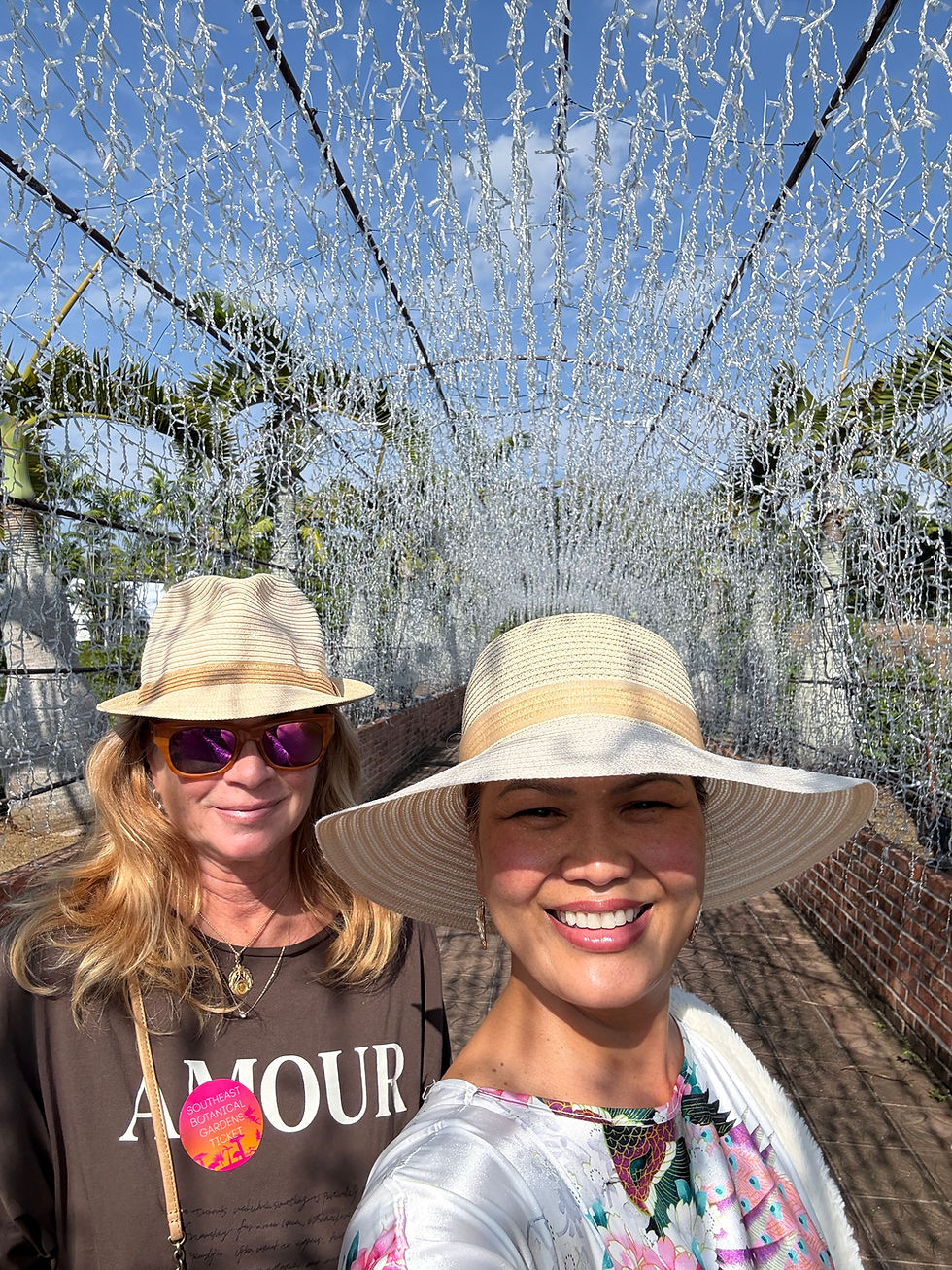
One of our first stops was the Southeast Botanical Gardens. I expected tropical plants, lush paths and the dense greenery that feels so naturally at home in Okinawa.
What I did not expect was an animal area where visitors could interact with some of the animals.
I should say that I do not like zoos. I have never been comfortable with animals being kept for our entertainment, so I had mixed feelings about that part of the garden.
Then I saw the capybaras.
Capybaras are my favorite animals, and until that day, I had never been close enough to pet one. There was something almost surreal about finally standing beside these calm, wonderfully peculiar creatures I had loved from afar.
My feelings about animals in captivity did not disappear. But neither did my delight.
It was a complicated little moment—and one of the happiest surprises of the trip.
Somewhere New for Both of Us
PK wanted to explore the islands around Uruma because, despite living in Okinawa, she had not spent much time in that part of the island.
Somewhere along the drive, we stopped at the Yakena Strait Observatory, a small viewpoint overlooking the water toward Yabuchi Island.
I do not remember us having a profound reason for going. We were simply driving around together, following the coastline and seeing somewhere new.
The water below was an extraordinary blue-green, framed by dense shoreline and small islands. It was quiet, unassuming and far removed from the grand observation decks designed to impress visitors.
Sometimes that is enough: a road neither of you knows, a view you did not plan your day around, and a friend beside you seeing it for the first time too.
The Croissant I Still Remember
Along the way, we stopped at Boulangerie Café Yamashita.
Of all the meals and cafés I have experienced while traveling, this tiny stop remains unusually vivid because of one croissant.
It came straight from the oven—warm, delicate, buttery and so good that I am still prepared to call it the best croissant I have ever eaten.
Perhaps the memory is also inseparable from the woman who served us. She was incredibly sweet, and her warmth gave the café the feeling of a place discovered rather than merely visited.
Travel memories rarely organize themselves according to importance. A landmark may fade, while a warm pastry and a stranger's kindness stay with you for years.

One Night to Stop Moving
For one night, PK and I checked into EM Wellness Lifestyle Resort.
We had been trying to compress an entire decade of catching up into four days. By then, we needed a pause from driving, exploring and attempting to say everything that had gone unsaid.
We enjoyed the resort's large Japanese bath and booked its signature spa experience: a long massage followed by a facial.
My therapist was one of the sweetest women. The treatment itself was extraordinary, but what stayed with me was the gentleness and care she brought to it. There are people who perform a service competently, and then there are people whose presence makes being cared for feel deeply human.
For one afternoon and evening, we did very little except soak, rest and allow someone else to take care of us.
It was exactly what we needed.

Okinawan Clay, Still Shaped by Hand
On our final day, we visited Yachimun no Sato, the pottery village in Yomitan.
Yachimun means pottery in the Okinawan language, and the village is home to workshops where ceramicists continue a tradition shaped by Okinawa's own history, influences and sense of place.
At the center of the village is a great multi-chambered climbing kiln built into the hillside. It is not an artifact standing empty for visitors; it is still shared and fired by local potters.
That was what I loved most about Yachimun no Sato. This was not a place preserving Okinawan pottery as something finished and safely contained in the past. Clay was still being shaped. Kilns were still being fired. The tradition was still alive in the hands of people working there.
We wandered between the studios, taking in shelves of earthy glazes, hand-painted patterns and wonderfully expressive shisa, Okinawa's guardian figures.
Some places ask you to admire what once existed. This one invited us to witness what continues.

At the Edge of Okinawa
Our final stop was Cape Zanpa, on the western edge of Yomitan.
The coastline there is rugged and windswept, with dark cliffs facing the East China Sea and a white lighthouse standing above them. It felt very different from the soft beaches that so often represent Okinawa in travel images.
We walked through the park and along the rocky coast with the wind coming straight off the water.
Four days were never going to be enough to understand Okinawa. I had seen gardens and islands, pottery and cliffs. I had tasted an unforgettable croissant, met my first capybara and been cared for by a remarkably gentle woman.
But Okinawa had remained mostly beyond the frame.
And perhaps that was appropriate. This journey had never really been about seeing the island comprehensively. It was about seeing PK again.
At Cape Zanpa, looking out toward a much larger Okinawa I had barely begun to discover, I knew I would need to return one day—alone, with time to listen more closely to the island's Ryukyuan history, sacred landscapes and distinct identity.
This visit, however, belonged to friendship.
Ten Months Earlier: Back to Busan
From Okinawa, the film returns ten months—to the journey I had been sharing before this unexpected interlude.
After Fukuoka, I flew to Busan.
I stayed at Lavalse Hotel, overlooking Yeongdo, where the rooftop café opened onto a broad view of the harbor, bridges and neighborhoods climbing the hills. Busan seemed to stretch in every direction.
There was no revelation waiting for me there. Only coffee, a city seen from above and the pleasure of having nowhere else to be for a little while.
Busan also meant seeing Serena again.
Travel changes when a local friend joins you. You stop paying quite so much attention to directions and schedules. The destination becomes entangled with conversation, shared food, small jokes and the simple pleasure of having someone walking beside you.
Like Okinawa, this part of the journey was filmed in pieces.
Sunset on Busan's Quiet Side
One evening, Serena and I went to Morundae for sunset.
This western edge of Busan feels far removed from the glass towers and beaches most visitors associate with the city. Wooded paths meet a rocky coastline, and the sea opens toward the horizon without asking for attention.
We arrived as the light was already disappearing. There was no time to search for the perfect angle or carefully construct a sequence. We simply walked toward the water and watched the day end.
I have seen sunsets in many countries.
I still never find them ordinary.
A Collection of Pauses
At NATGAE Elephant Café, Serena and I stopped for tea.
It was not the kind of place that appears on a list of Busan's essential attractions. Yet travel is built from these moments too: sitting across from a friend, something warm between your hands, a conversation you may no longer remember word for word but still remember enjoying.
I also returned to Seokbulsa Temple, high in the mountains above the city.
I had visited before and already told its story in another film, so I did not need to document every detail again. Returning allowed me to experience it differently. The first time we visit somewhere remarkable, we often concentrate on taking it all in. The next time, we can begin to notice how it feels to be there.
The Buddhas carved directly into the stone cliffs remained as extraordinary as I remembered. But I spent less time behind the camera. I had not returned to collect proof. I simply wanted to stand there again.
Later, I found Darakjae, a traditional tea house that felt removed from the movement of the city.
By then, Busan had unintentionally become a collection of pauses: coffee above the harbor, sunset at the edge of the city, tea with Serena, a temple carved into stone, and another quiet room where water was poured slowly into a cup.
Perhaps that is one reason I keep returning to Busan. It can be enormous, noisy and relentlessly alive, yet it continues to offer places where the world becomes very still.
The Journey Continues to Mokpo
Eventually, it was time to leave Busan and travel west to Mokpo.
I did not choose Mokpo because of its history or because it appeared on a list of places I was supposed to see.
I went because one of my favorite Korean dramas, Do Do Sol Sol La La Sol, was filmed there.
And if I am completely honest, I mostly wanted to ride the cable car where Ra-ra and Jun had their first kiss.
That was reason enough for me.
What I did not expect was how much I would love Mokpo itself.
But that is where the next story begins.
What the Camera Misses
This was not one of my usual journeys. There was no carefully planned narrative, no grand conclusion and very little footage composed with a finished film in mind.
Only fragments: four days with an old friend, another reunion in Busan, beautiful places, kind women, warm croissants, cups of tea, sunsets and the moments I happened to record along the way.
For a while, I thought imperfect footage meant I had failed to capture the trip.
Now I think it captured something else.
It preserved the evidence of days that were allowed to be lived before they were turned into content.
The camera missed much of Okinawa. It missed most of the conversations, the arguments, the laughter and the strange intimacy of trying to understand who two people had become after ten years apart.
But perhaps not every meaningful moment needs to be shown.
Some memories can remain ours.
And the fragments that remain can still be enough.
Watch the accompanying film, “I Went to Okinawa to See a Friend After 10 Years,” on Noe Rose Travels.
For reflective journeys and walking experiences designed to help you reconnect with yourself, explore The Solo Ways and the Reset Collection.


Comments