.png)


When a Place Becomes Part of You: My Final Days in South Korea


There comes a moment in every meaningful journey when you realize you're no longer discovering a place.
You're preparing to leave it.
The suitcase sits open.
The flight confirmation waits in your inbox.
The days become numbered.
And suddenly, the details you've stopped noticing begin demanding your attention again.
A familiar street.
A favorite café.
The route you've walked dozens of times.
A friendship that has quietly become part of your daily life.
My final days in South Korea began in Busan.
One More Night
I had checked into the Commodore Hotel for my last nights in the city.
A place known to many K-drama fans through Crash Landing on You, the hotel feels like a relic from another era. Its architecture carries a sense of grandeur that speaks of a different Busan, one that existed long before the city's modern skyline emerged.
That evening, my friend Serena joined me.
We didn't do anything extraordinary.
In fact, that's precisely why I remember it so clearly.
We walked to E-Mart.
Bought bowls of kimchi ramyeon.
Sat together eating late into the evening.
Then somehow found ourselves climbing 204 stairs to a hilltop outdoor gym overlooking the city.
There was no plan.
No itinerary.
No attraction waiting at the top.
Just laughter, conversation, and the simple joy of being exactly where we were.
Travel often teaches us that the moments we remember most are rarely the ones we anticipated.
Years from now, I may forget the details of many places I visited.
I doubt I'll forget that night.
A Final Stop Before Leaving Busan
The following morning, before heading toward the airport, I made one final stop.
The United Nations Memorial Cemetery.
Time didn't allow for a full visit, but I spent a few moments near the memorial grounds, surrounded by the flags of nations whose soldiers fought during the Korean War.
It's the only United Nations cemetery in the world.
A fact that feels astonishing when you consider the history it represents.
Standing there, I found myself reflecting on the Korea I had spent weeks exploring.
The cafés.
The mountains.
The temples.
The friendships.
The coastlines.
Every experience exists within a larger story.
A story shaped by sacrifice, resilience, and an extraordinary determination to rebuild.
Korea never hides its history.
It carries it forward.
North to Incheon
A short flight later, I found myself in Incheon.
My home for the final days of this journey would be Blue Ocean Residence.
The atmosphere felt different from Busan.
Busan unfolds organically.
Incheon often feels intentional.
Nowhere is that contrast more visible than Songdo.
That evening, I visited Moonlight Festival Park.
Songdo is one of the world's most ambitious planned cities, built largely on reclaimed land along Korea's western coastline.
Entire neighborhoods rose from what was once open sea.
Walking through the park as the sun disappeared, I couldn't help admiring the confidence behind such a vision.
Korea has spent generations rebuilding, reinventing, and reimagining itself.
Songdo feels like a continuation of that story.
Seoul on Foundation Day
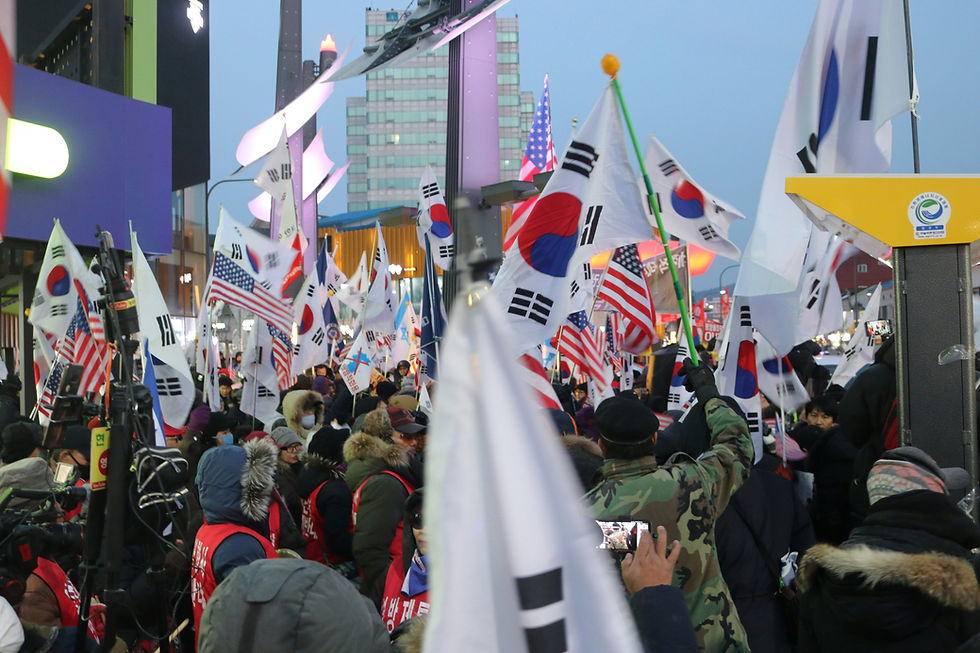
The following day brought me into Seoul.
October 3rd.
National Foundation Day.
Known as Gaecheonjeol, it commemorates the legendary founding of Korea by Dangun.
There was something fitting about exploring Seoul on a day dedicated to the country's origins.
I began in Bukchon Hanok Village, where traditional homes continue to stand among one of the most dynamic cities in the world.
From there, I walked toward Gyeongbokgung Palace.
Built in 1395, the palace served as the principal royal residence of the Joseon Dynasty.
Kings ruled from these grounds.
National decisions were made here.
The fate of a kingdom unfolded within these walls.
Yet the palace's history mirrors Korea's own.
It has been destroyed.
Abandoned.
Rebuilt.
Damaged again.
Restored once more.
Walking through Gyeongbokgung feels less like visiting a monument and more like walking through a living record of Korean endurance.
One structure drew my attention more than any other.
Hyangwonjeong.
A graceful pavilion standing quietly in the middle of a pond.
Built in 1873 under King Gojong, it emerged during a period of growing uncertainty.
Foreign powers pressed against Korea's borders.
The Joseon Dynasty was entering its final decades.
The future was anything but certain.
Yet this place was created.
A place of beauty.
Reflection.
Balance.

Looking across the water, I found myself thinking about Korea's remarkable continuity.
Dynasties disappeared.
Wars scarred the peninsula.
Occupation attempted to erase identity.
The nation was divided.
Cities were reduced to rubble.
Yet the thread connecting past and present remains unbroken.
Language.
Tradition.
Memory.
Culture.
The Korea I had come to know suddenly felt much larger than the places marked on my map.
The Final Days
As my departure approached, I spent time walking through Incheon Seaside Park.
No agenda.
No rush.
Just space to reflect.
Travel changes over time.
When I was younger, I wanted to see everything.
Now I'm more interested in experiencing what is already in front of me.
Presence has become more valuable than productivity.
Depth more meaningful than quantity.
And South Korea has given me countless opportunities to practice both.
The day before, I had discovered a place that deserves its own story.
A place I intentionally left out of this one.
That chapter comes next.
For now, this story belongs to the final days.
The quiet transition between staying and leaving.
The space between gratitude and goodbye.
When a Place Becomes Part of You
Every country leaves something behind.
Photographs.
Stories.
Memories.
South Korea left much more than that.
It left friendships.
Questions.
Perspectives.
Lessons that continue unfolding long after I've returned home.
The longer I spend here, the more difficult it becomes to leave.
That tells me something important.
At some point, Korea stopped being a destination.
It became part of my life.
And although this chapter was ending, I already knew something else.
I would be back.
Some places never really leave us.
South Korea has become one of those places.
WATCH THE FULL VLOG HERE:


Comments